
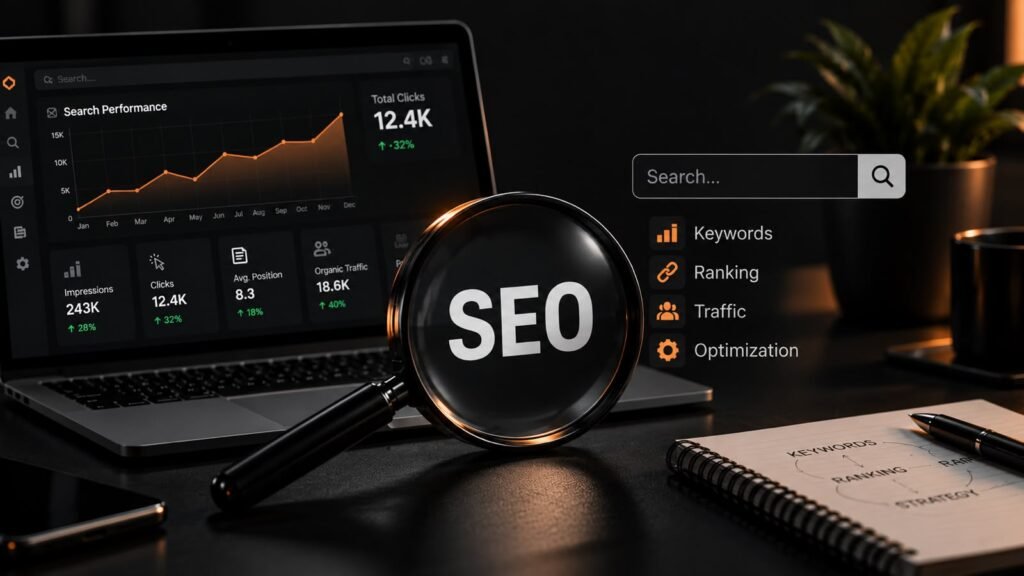
In today’s competitive digital landscape, every business wants to attract more customers, generate quality leads, and increase sales. But when it comes to online marketing, one important question often comes up: Should you invest in SEO or paid advertising?
Both strategies can help your business grow, but they work in different ways. SEO focuses on improving your website’s visibility in organic search results, while paid advertising helps you reach potential customers through sponsored placements.
Understanding the differences between SEO and paid advertising can help you choose the right strategy for your business goals, budget, and timeline.
What Is SEO (Search Engine Optimization)?
Search Engine Optimization (SEO) is the process of improving your website so it can appear more prominently in organic search results on platforms like Google.
The goal of SEO is to help people find your business when they search for products, services, or information related to what you offer.
Benefits of SEO
Long-term visibility: Well-optimized pages can attract organic traffic over an extended period.
Cost-effective growth: You don’t pay for every organic click, although SEO requires time, expertise, and ongoing investment.
Builds credibility: Many users value helpful content and relevant organic search results.
Consistent traffic: Strong rankings can bring potential customers to your website over time.
Supports brand awareness: Useful content helps establish your business as a trusted resource in your industry.
Challenges of SEO
SEO takes time. Depending on your competition, website condition, and industry, it may take several months to see meaningful results. Rankings are also not guaranteed and require continuous monitoring, content improvements, and technical maintenance.
SEO is ideal for businesses that want sustainable online visibility and long-term organic growth.
What Is Paid Advertising?
Paid advertising allows businesses to promote their products or services by paying for placements on platforms such as Google Ads, Facebook, Instagram, and LinkedIn.
For example, when someone searches for a service on Google, your business may appear in a sponsored search result if your ad campaign targets that query and wins the relevant ad auction.
Benefits of Paid Advertising
Faster visibility: Campaigns can begin generating impressions and clicks soon after launch.
Precise targeting: Reach audiences based on factors such as location, interests, search intent, and demographics, depending on the platform.
Budget flexibility: Set campaign budgets and adjust spending according to performance.
Measurable results: Track clicks, leads, conversions, and advertising costs.
Campaign control: Test different messages, offers, and landing pages to discover what works best.
Challenges of Paid Advertising
Paid advertising requires an ongoing budget. Once you stop paying, your ads generally stop appearing. Results can also become expensive in competitive markets, and poor targeting or landing pages can waste your budget.
Paid advertising is ideal for businesses seeking faster exposure, immediate campaign testing, or leads within a defined timeframe.
Which Is Better for Your Business?
There is no single answer for every business. Your decision should depend on your objectives, budget, competition, and how quickly you need results.
Choose SEO If:
You want to build long-term organic traffic.
Your customers regularly search online for your products or services.
You want to establish authority through helpful content.
You are willing to invest consistently and wait for results.
You want to reduce your dependence on paid traffic over time.
For example, a service-based company can use local SEO, service pages, and informative blog posts to reach people searching for its services.
Choose Paid Advertising If:
You need leads or sales quickly.
You are launching a new product or service.
You want to promote a limited-time offer.
You need to test a new market or audience.
You have a clear advertising budget and conversion goal.
For example, an online store can use Google Shopping ads or social media advertising to promote a seasonal offer and measure sales generated by the campaign.
Why Combining SEO and Paid Advertising Can Be More Effective
Instead of treating SEO and paid advertising as competing strategies, consider how they can work together.
A combined approach can help your business capture both immediate opportunities and long-term growth.
Here’s how:
1. Generate Leads Faster: Use paid campaigns to attract potential customers while your SEO strategy builds organic visibility.
2. Understand Customer Intent: Analyze search terms and ad performance to identify topics and keywords worth targeting through SEO.
3. Increase Brand Visibility: Your business can appear in both paid and organic search results for relevant searches, where eligible.
4. Improve Conversion Rates: Use performance data to refine website content, landing pages, calls to action, and ad messaging.
5. Build Sustainable Growth: Gradually strengthen organic traffic while using paid campaigns for promotions, competitive keywords, and specific business goals.
The key is to measure performance across both channels and invest in the activities that deliver meaningful business results.
How to Choose the Right Strategy for Your Budget
If your budget is limited, start by identifying your most important business goal.
For long-term growth: Prioritize essential SEO work, including technical improvements, keyword research, and high-quality content.
For immediate leads: Consider a focused paid campaign targeting high-intent customers.
For balanced growth: Divide your budget between SEO and paid advertising based on your timeline, available resources, and results.
Don’t focus only on website traffic or clicks. Track meaningful metrics such as qualified leads, conversion rates, customer acquisition cost, and return on advertising spend.
Remember, the cheapest click is not always the most valuable one. Your ultimate goal is to attract the right customers and generate profitable growth.
Conclusion: SEO or Paid Advertising?
SEO and paid advertising serve different purposes, and neither is automatically better for every business.
SEO helps build long-term organic visibility, credibility, and sustainable traffic. Paid advertising can deliver faster exposure, targeted reach, and measurable campaign results.
The best strategy is the one that aligns with your business goals, audience, and budget. For many businesses, combining both approaches creates a strong digital marketing foundation that supports immediate opportunities and long-term success.
Ready to Grow Your Business Online?
Not sure whether SEO, paid advertising, or a combination of both is right for your business?
Our digital marketing team can help you develop a strategy tailored to your goals, target audience, and budget.
🚀 Let’s turn your online visibility into real business growth!
📩 Contact us today for a digital marketing consultation and discover the right strategy to attract more customers, generate quality leads, and grow your business.
Your next customer could be searching for you right now. Make sure your business gets noticed!